Tuesday, December 12, 2006

Senatus Populusque Romanus: Santa Claus…


O’Tannenbaum…vive! Hey, if anyone needs a Santa visit, just see here: www.santaoncall.com !

Pope Leo XIII on the family...


“The family may be regarded as the cradle of civil society, and it is in great measure within the circle of family life that the destiny of states is fostered.”

Sapientiae Christianae (Jan 10, 1890)

“No human law can abolish the natural and original right of marriage, nor in any way limit the chief and principal purpose of marriage ordained by God’s authority from the beginning: Increase and multiply. Hence we have the family, the society of a man’s house – a society very small, one must admit, but none the less a true society, and one older than any state. Consequently, it has rights and duties peculiar to itself which are quite independent of the state.”

Rerum Novarum (May 15, 1891)

The rise of the Hungarians...


From Hungary, the land of the plains watered by the Theiss and the Danube, we have a rampart of the Church of Christ: a Catholic nation.

From Attila the Hun to St. Stephen! Baronius knew Church history better than anyone. When, in his history, he reaches A.D. 1000, he hails the arrival of the Hungarian deputies, who came to offer to the Roman Church the suzerainty of their land, and beseech the Pope to confer the title of king upon their duke Stephen. The Hungarian monarchy was founded upon Peter; for his sake it subsisted, and he alone, under God, was the safeguard of its future. With a wonderfully munificent spirit of religion, Stephen introduced into Hungary both the faith of Christ and the regal dignity. He obtained his royal crown from the Roman Pontiff, and having been, by his command, anointed king, offered his kingdom to the Apostolic See.

Every September 2 we celebrate the Feast of St. Stephen, King of Hungary, Confessor.
St. Stephen, pray for us!

Hungarian Cardinal: splendor of the cappa magna...


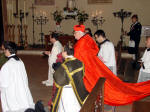
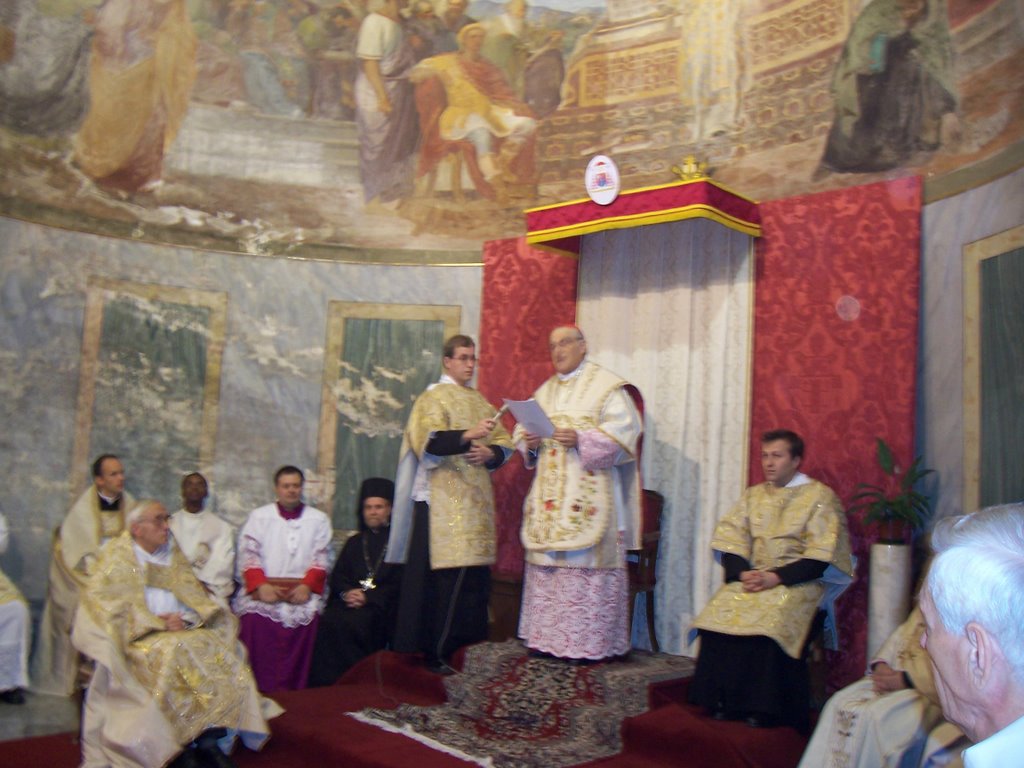
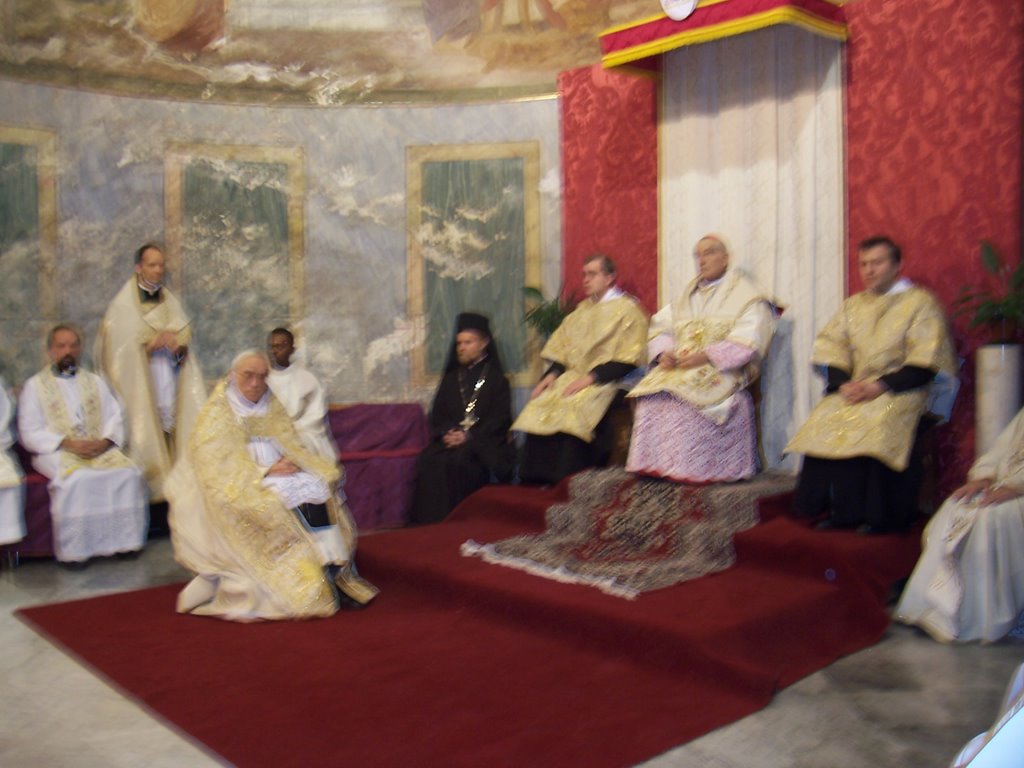
Wow, don't you just love the glory of the Roman Rite? Here we see the Archbishop Emeritus of Esztergom-Budapest and Primate of Hungary, László Cardinal Paskai. Isn't the cappa magna just glorious?! His Eminence was the celebrant of this Requiem Mass last November 4 in Siena for the repose of the souls of the Hungarian victims killed by the Soviets during the great uprising of 1956.

This year marks the 50th anniversary of the uprising. Please pray for the victims. See more photos of this lovely Mass here: http://templomosok.freeweb.hu/aktualis.html

Monday, December 11, 2006

Sedes Consilii Centralis: urbs Roma...


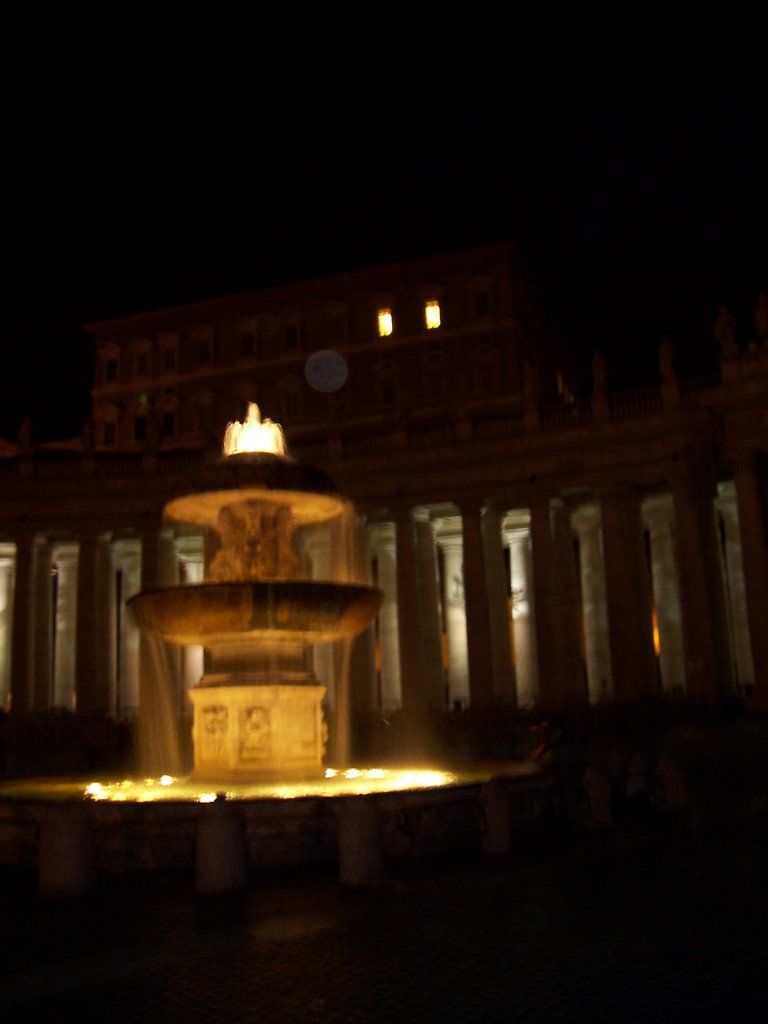
Does everyone know what a zenith is? It’s that point of the heavens vertically above one. Is it just me or isn’t it just glorious to have your zenith be the Holy City (la Roma)!?

Infatti, wouldn’t it be just the best to die here in some glorious manner (like while professing the Nicene Creed at the words: …Et unam, sanctam, Catholicam et Apostolicam [et Roman!] Ecclesiam…) and then be interned in this rich soil soaked by the blood of the martyrs and trod over by the blessed apostes Peter and Paul?

At the internment I can just picture the cleric in his black cope and the altar boy holding the aspersorium stoup and the wondrous prayer from the Roman Ritual!

The zephyr of Catholic youth: an attorney...


Isn’t she so sweeeet?! Of course everybody just loves her charm! We taught her to say to visitors who stop by at the door: “Cheers, I’m going to be a Juris Utriusque Doctor!” Of course nobody knows what that means and so they all laugh as she then describes what it is!

“I will graduate from an Ivy League Univeristy as a Doctor of Civil Law: J.C.D. (Juris Civilis Doctor). Then to Rome to graduate from a Pontifical Univeristy as a Doctor of Canon Law: J.C.D. (Juris Canonici Doctor). Then, and only then, will I be, the few, the proud, the brave: the Doctor of both Laws: J.U.D.!”

"My doctrine is not so much mine as that of Him who sent Me."
John 7: 16

Elegance: the ferraiolone...


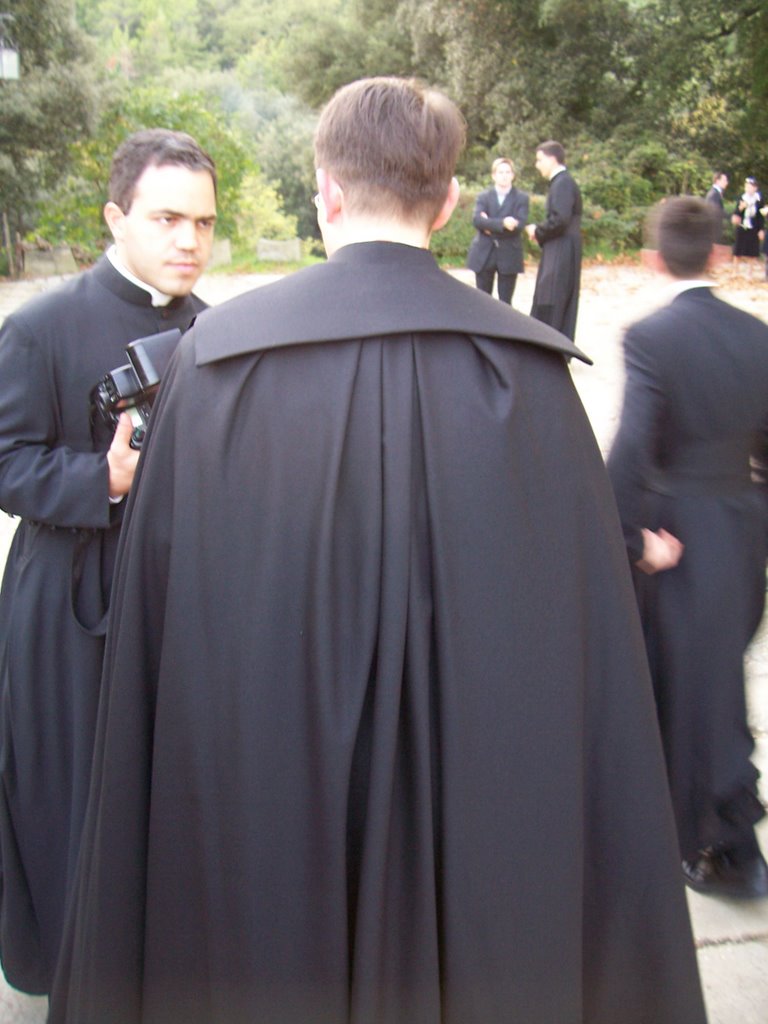
Owing to the influence of clergy who have sojourned or studied in Rome, the wearing of the Roman cloak becomes more and more frequent (Signor Gammarelli can make you one). Clergyman know that the cloak is a nice complement of the ecclesiastical dress outside of church ceremonies (scholastic events in Catholic colleges, i.e. graduation), and has, besides, the advantage of being stately.

Until 1967, when a cleric was received in audience with the Pope, he was required by protocol to wear such a cloak (or at least greca). It was always one of those nice extra touches. Often, these practices have their roots in the old etiquette of the Roman court.

When I grew up as a kid my pastor, Msgr. Richard Schuler, had a few such cloaks. His cappa nigra was from Toomey and his mother made him his one ferraiolone and he even had another one, too, I think (and then a few monsignorial ones, too)!

The pet of Pius XII: Gretel...


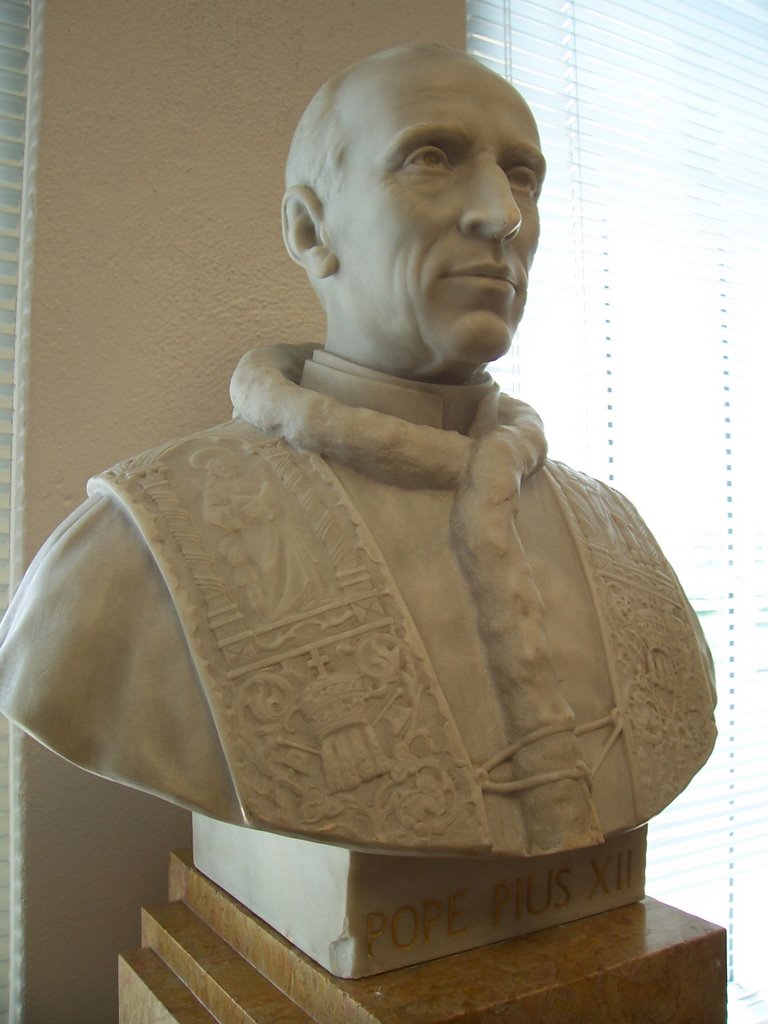
One of his great loves was birds and another was German language. So he combined the two: a goldfinch named Gretel! A goldfinch is a small brightly colored European finch often kept as a cage bird. In the summer the male becomes bright yellow, with black wings, tail and crown.

When he died, during the interregnum, la Popessa brought his beloved cage birds to the North American College where Frank Cardinal Spellman invited her to live for some time before she founded Casa Pastor Angelicus.

The ideal: a golden tenor...


Have you every had the delight to hear the Roman Rite sung by a true tenor (who wears the four-horned biretta)? We enjoy this gift, every Sunday, under the Roman sun!

Welcome to our parish, the Church of St. Gregory (http://www.fssp-roma.org/). Our usual celebrant, a son from Catholic Hungary, is a golden tenor.

Why a tenor? The tenor is the highest male voice (except the falsetto), having a compass between about the first c below middle c and the first c above middle c. Of course not every priest is a tenor, but those that are are particularly blessed.

And he wears the biretta with four horns/projections on top! The principal mark of a Doctor’s dignity is the four-horned biretta (versus the normal three-horned). The doctoral biretta given by the Roman universities is of plain black silk and it looks great!

Ladies and Gentlemen: Don Lorenzo Perosi...


For me one of the greatest perks of this world is to be in the Vatican Basilica, in the presence of the Roman Pontiff (the Patriarch of the West), with the Sistine Choir raising their voices to the heavens with the Tu Es Petrus or Cantate Domine of Don Lorenzo Perosi! I have to admit that I just love his music!

But just remember that Perosi wasen’t the best. The best still lives: Il Maestro Domenico Bartolucci (his Christus est Qui Natus is also my favorite!)

“Perosi was an authentic musician, a man utterly consumed by music. He had the good fortune of directing the Sistine at the time of the motu proprio on sacred music, which rightly wanted to purify if from the theatrics which which it was imbued. He could have given a new impulse to Church music, but unfortunately he didn’t have an adequate understanding of polyphony in the tradition of Palestrina and of the tradition of the Sistine…Today the fashion in the churches is for pop-inspired songs and the strumming of guitars, but the fault lies above all with the pseudo-intellectuals who have engineered this degeneration of the liturgy, and thus of music, overthrowing and despising the heritage of the past with the idea of obtaining who knows what advantage for the people. If the art of music does not return to its greatness, rather than representing an accommodation or a byproduct, there is no sense in asking about its function in the Church…”

-Interview with Msgr. Bartolucci ( www.chiesa.espressonline.it )

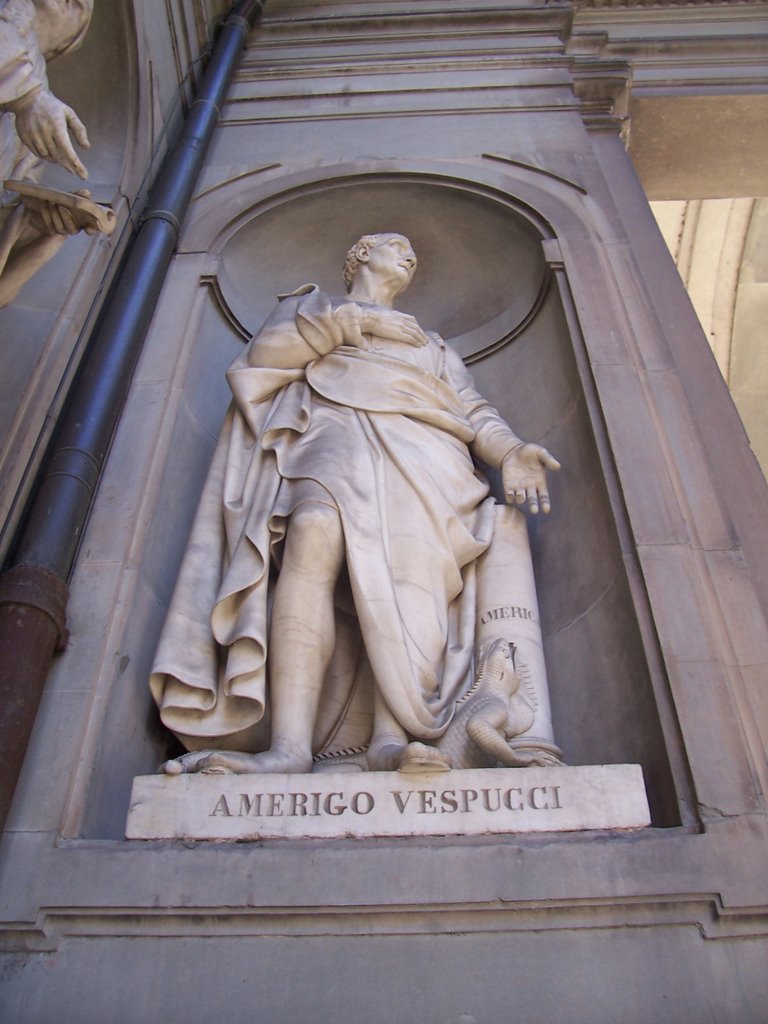
How did "America" get its name...?

In Firenze my roommate stopped me to explain the story of this Italian. I hope everyone knows who he is: Amerigo Vespucci (1451-1512).

Once an Italian joked with me: "Didn't you know that America was discovered by an Italian...who was lost!" Then he went on: "Didn't you know that America was named after an Italian, too!"

This was his name in Latin: Americus Vespucius. He was an Italian navigator; the eponym of America!

Europa Cristiana: a future of zeal...

During the l'Angelus with the Vicar of Christ we see this little warrior with all his team spirit for the winning team - the Church of Christ! Thank you for giving us hope, little dude!
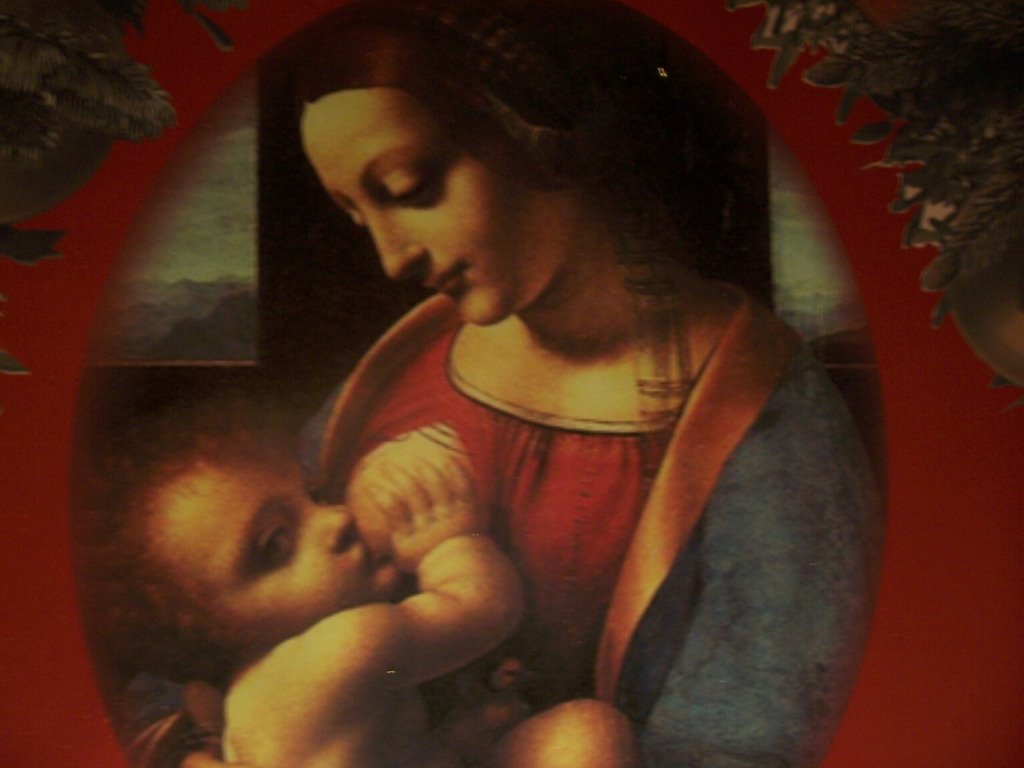
In Latin: Vince in bono malum.
In Italian: Vinci il male con il bene.
In English: Conquer the bad with good.

Thursday, December 07, 2006

December 8: Solemnity of Immaculate Conception..

I wish everyone a very blessed day today, December 8! In Italy (a still Catholic nation), today is a national holiday. Tanti Auguri!

December 7: Feast of Saint Ambrose...

Ah, the Milanese parish in Rome (it's really one of the best)! Viva Milano and Lombardia!

Every year on the Feast of St. Charles and then for St. Ambrose, everybody makes a visit here.

This is my favorite sanctuary in Rome. Aren't these many stairs great? It would be just glorious to see an Ambrosian Rite Mass here at this altar with all the smells and bells!

December 7: Pearl Harbor...


This photo is from the port of Rome, Civitavecchia (70 km northwest of Rome).

These are American ships. They stop in the port of Rome for a few days, coming from Iraq. It's really an experience to speak to the Marines as they are "fresh off the ship" from war.

God bless them all!

December 6: Feast of St. Nicholas...

When I was just a kid my dad always maintained a nice little (Catholic) tradition with us kids. Every year, on the eve of St. Nicholas day, he'd have us leave our shoes out for them to be filled secretly during the night by St. Nicholas!
My father, in his wisdom, taught us to santify the Advent season in this way. We were to keep "Christ" in CHRISTmas while at the same time learning who the "real" "Santa Claus" was...or who the other real Santa was!

The Basilica of St. Nicholas in Rome...


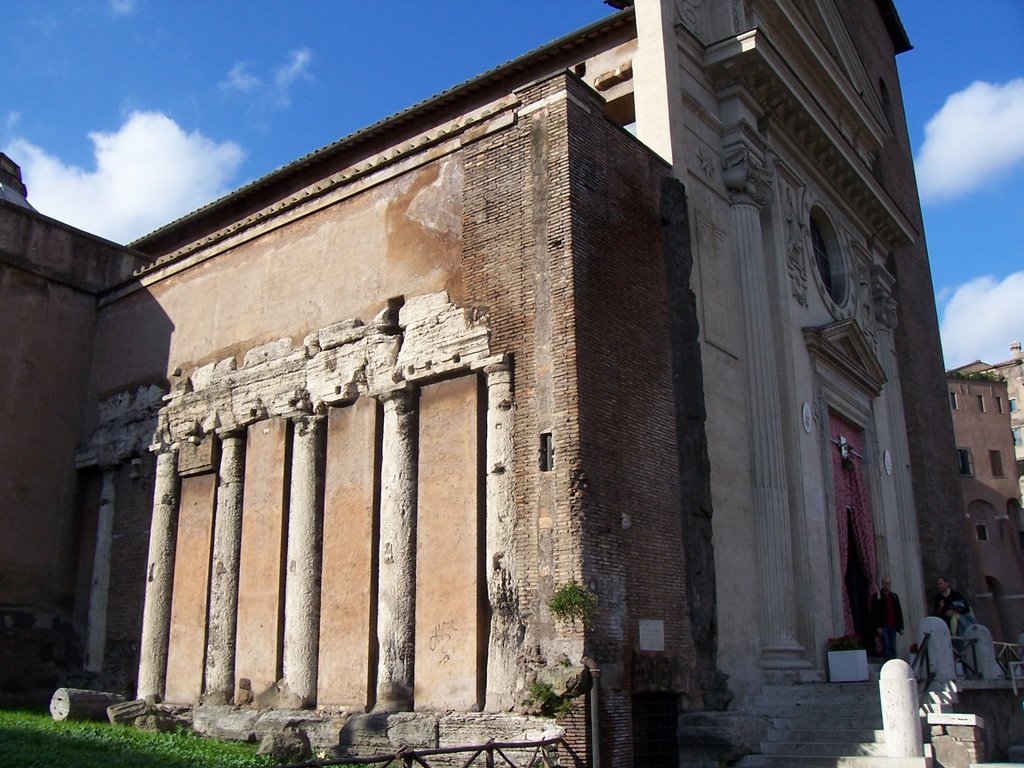
This is the Basilica of Saint Nicholas in Prison in Rome (Basilica S. Nicola in Carcere). It's on the Via Teatro Marcello, 46. Pilgrims from both East and West make pilgrimages to this church every year.

A friend asked me to "blog" the Roman celebration of the Feast of Saint Nicholas (a.k.a. Santa Claus) on December 6 and so I was there and these are the photos!

Although the body of St. Nicholas rests in Bari, Italy, there are two reliquaries in this church brought out every December 6 for the veneration of the faithful.
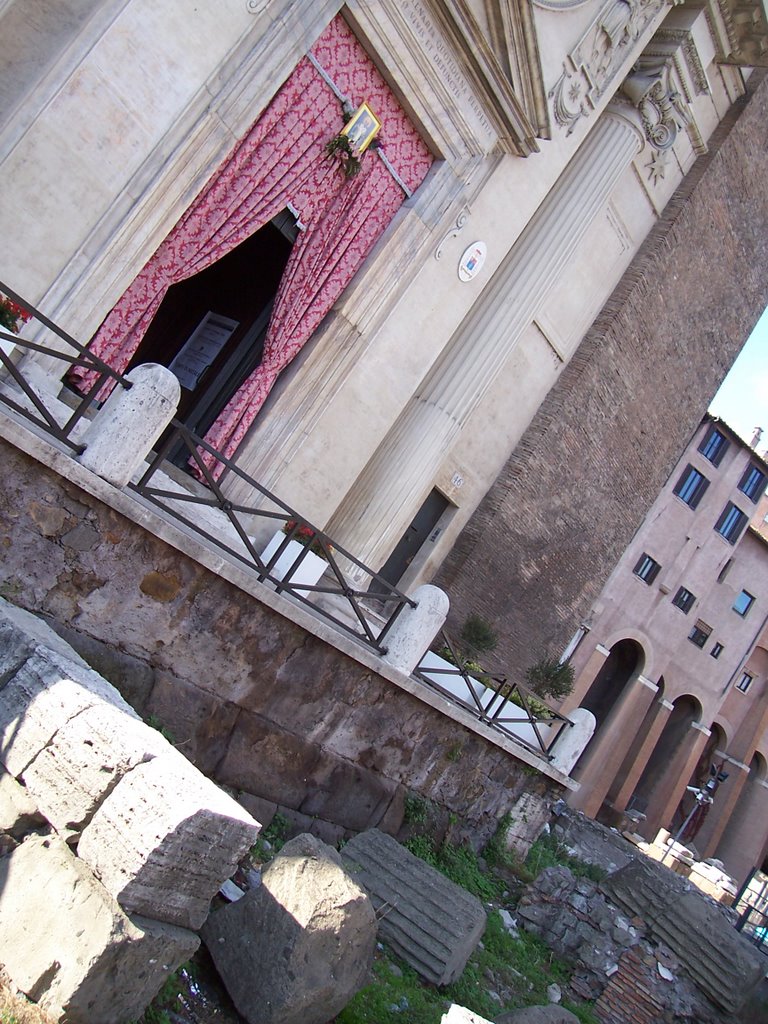
The entrance decorated for the celebration...


For the Feast of Saint Nicholas the main entrance of the church was decorated with this lovely damask curtain. An icon of the Saint with flowers was suspended on the upper part of the entrance as you can see in the photo (do you like the Roman ruins, too?).

On the left is the coat-of-arms of the reigning Pontiff. On the opposite side is the coat-of-arms of the Cardinal Protector of the church, Zenon Cardinal Grocholewski. He's from Poland and was born in 1939.

Cardinal Grocholewski was the celebrant of the Mass. He's well known in Rome as the Cardinal Prefect of the Congregation for Catholic Education as well as for being the Grand Chancellor of the Pontifical Gregorian Univeristy. Also, the Cardinal is known as being a talented latinist.

The altar...

This is the altar of the Roman Basilica of St. Nicholas, near to the Tiber River. The priest at the altar faces East and at the same time he faces the faithful (who are in the nave). Nevertheless, the standing cross with candles remains on the altar - not to "hinder" anyones view, but for the reflection of the cleric (and faithful!).

Vesting the Cardinal...

In his private chapel, or for a High Mass, the Bishop likely vests at the altar. Here we see the vestments laid out to be donned by the Cardinal. The red ribbon on the linen amice and the red silk partial lining on the alb are perrogatives of a prelate.
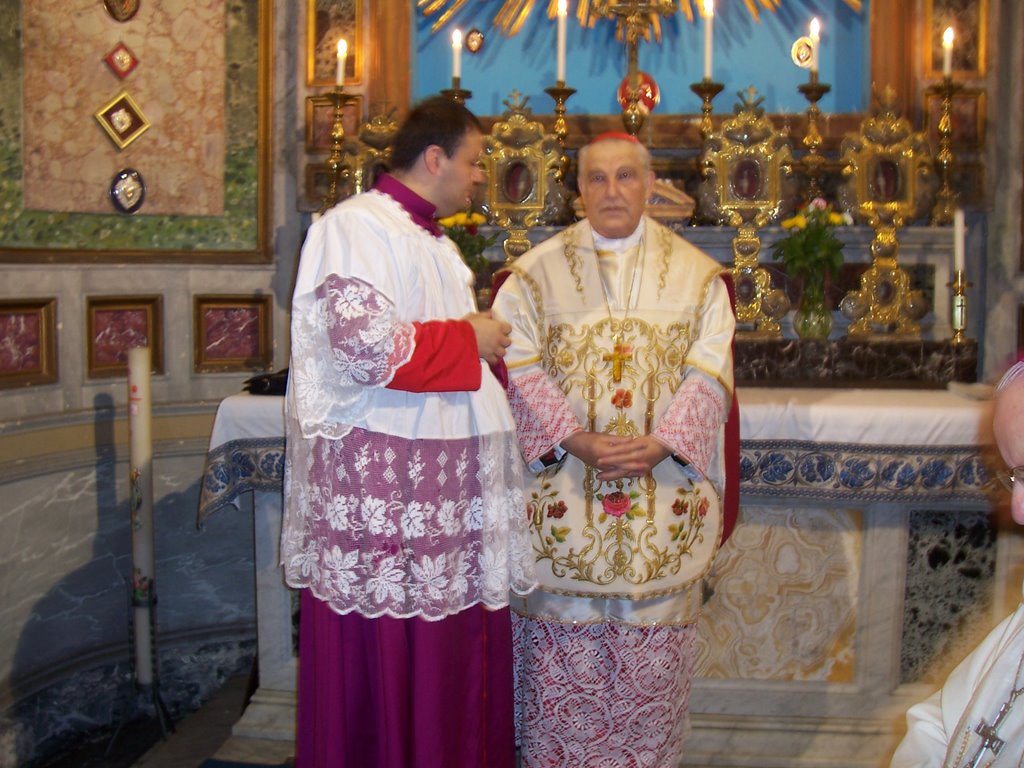
Cardinal Grocholewski...


His Eminence with the Italian Master of Ceremonies just before the Mass of Saint Nicholas.

One can really appreciate the craftsmanship of the lace apparel: it had been the nuns who used to labor in prayer while making all of these lovely garments for the Holy Mass (the most beautiful thing this side of heaven!).

East and West: two lungs...


These two guys were hilarious! Just before the procession I asked to take their photo. They joked about who should be, "ad dexteram Dei Patris..." As I laughed the Greek Orthodox cleric jumped to the left of the Cardinal for this pose!

The procession...

Glorious Roman style copes are always a plus! It's not every day you see four of them together...that all match (that spells an Episcopal Mass!).

Order yours today from a Roman paramenti sacri shop!

The credence table...


For an Episcopal Mass I always like to get a look at the credence table! Nice to see these treasures (hey, cool episcopal lavabo set!).

Roman tailored vestments...


Nice to hear the Epistle and the Gospel chanted as had always been the custom (good work, gentlemen!).

I have to admit I really prefer the antique "filagree" craftsmanship seen here, too (delicate and intricate ornamentation usually in gold or silver or other fine twisted wire)!
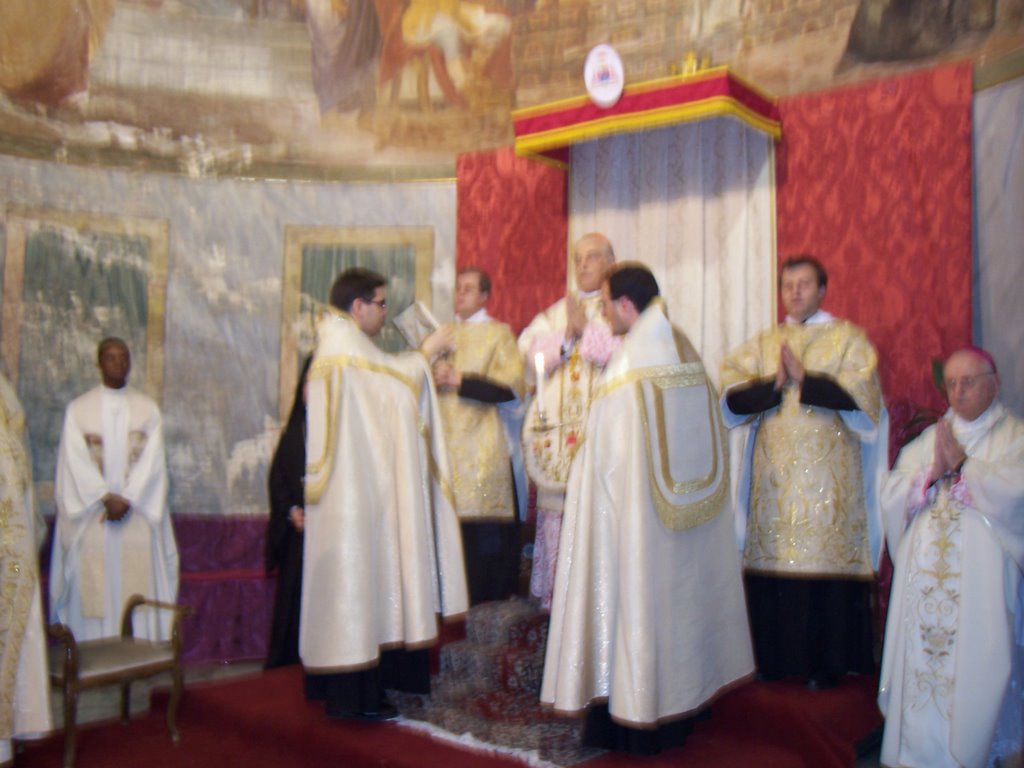
The Collect...


Nice to see the attendants of the Cardinal in copes as they always had been - with the bugia.

Can you see the one cleric holding the had-candlestick, called by rubrics and ceremonials bugia, palmatoria or scotula?

It’s a low candlestick with a long handle. It is held near to the book by one of the attendants of the Prelate whenever the latter reads or sings something from the book (except on Good Friday and not used by the Pope).

The Kyrie...

Nice to see everybody sit for the Kyrie (and Gloria) as was always the custom...

The Gospel...


Nice to see the Gospel chanted the way it always had been (on the Gospel side of the altar!).

The Sermon...


Nice to see such a well-done portable episcopal throne! It was nice to hear the Cardinal, a Pole, preach in Italian, too!

Lazio (Latinum) autumn...


This photo was taken on the way to the grocery store! The scent of autumn is in the Roman air this time of the year: end of November/beginning of December!

Autumn was Pushkin's favorite season (and mine, too!).

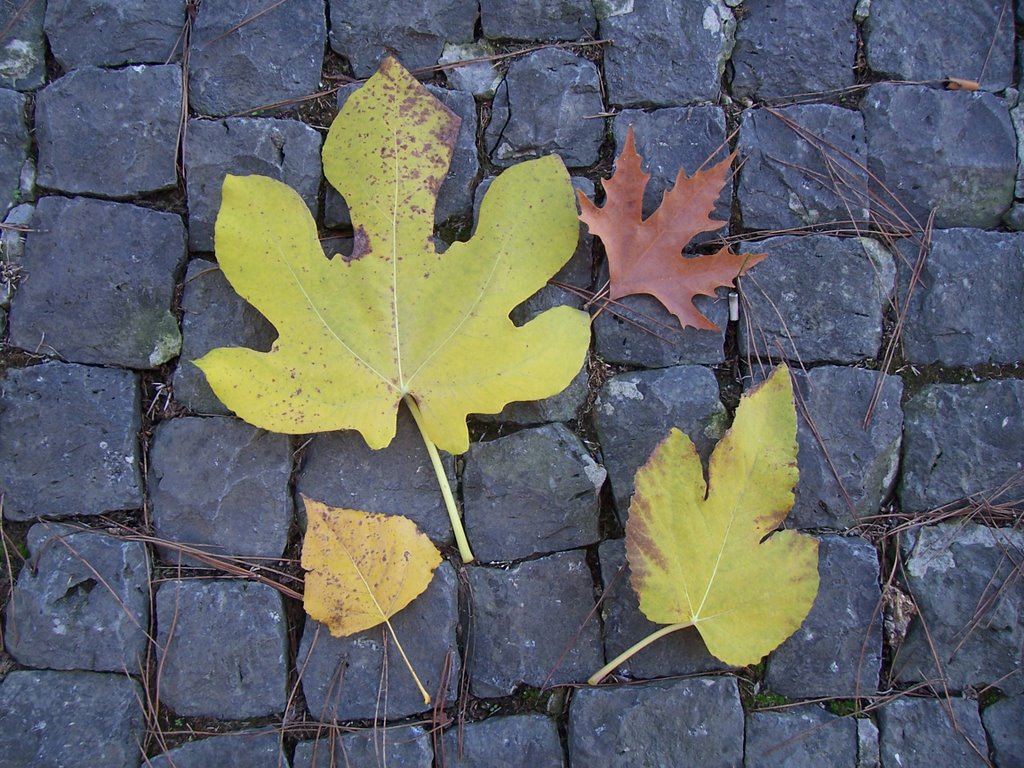
Fall foilage in Rome...


The idea was to make this photo artistic and I sure hope it worked! One can see how the Roman leaves are even related to ones that you might see in New York, Wisconsin or Washington, etc.

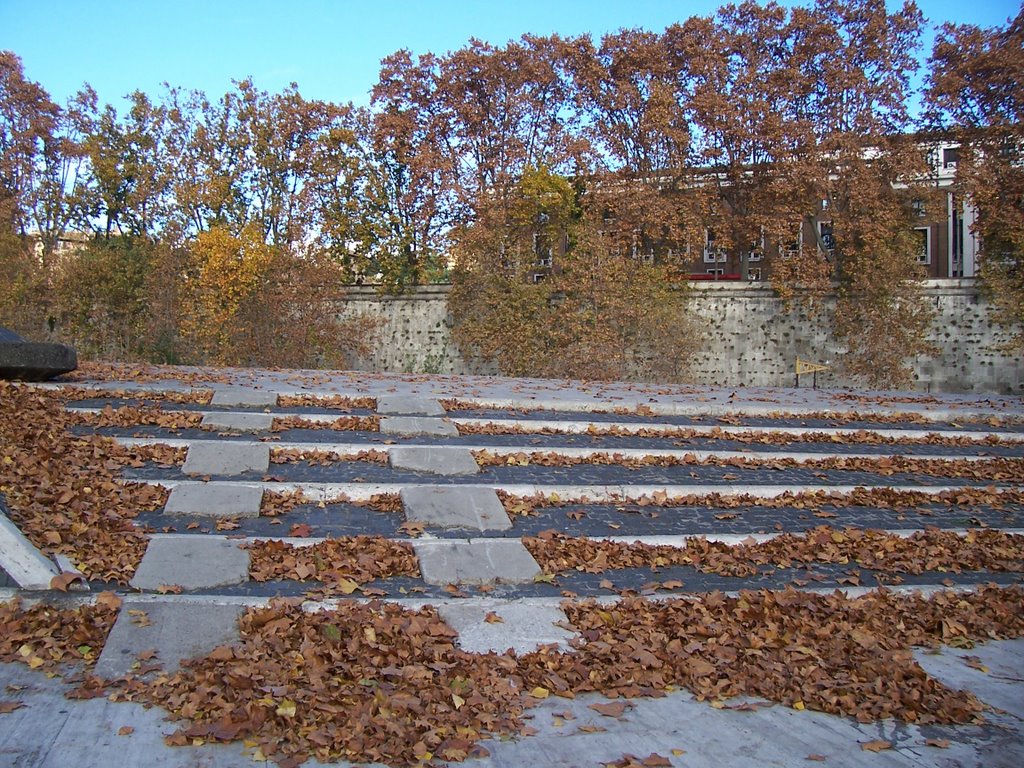
Autumn walk in Rome...


Every Roman autumn I like to take a sunny afternoon walk (and nap!) on Tiber Island during the last days of November/first days of December. To hear the roar of the Tiber with the colours and smell of the leaves is really a treat! Or, it's fun to take a Saturday gita to Tivoli to Hadrian's old villa to see the "fall colors," too.

Ukrainian Catholics in Rome...


I always enjoy seeing this nice Ukrainian Catholic parish in Rome just near to the Cavour Metro Stop. I cross myself as I pass by and say a quiet prayer for the often persecuted Catholics in that pocket of the world: stat promissa Fides!

There is a dynamic new family of consecrated life that does some work in Ukraine. See their nice sight to get a taste of their wonderful spirit: www.milesjesu.com .

Rome's Dominican sphere: the Angelicum...


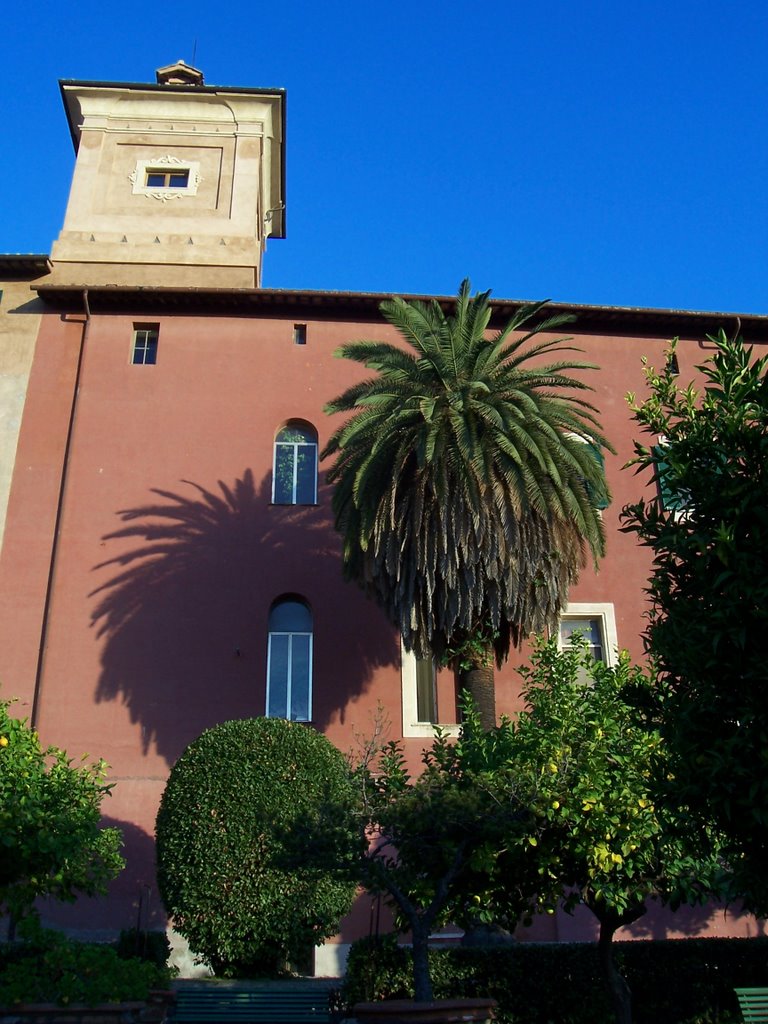
This is a photo of one wing of the Dominican Convent of Sts. Dominic and Sixtus in Rome (the Angelicum). The Genovese gardener mentioned to me that the "prior" lives and works in this part of the convent.

One can see this type of tower all over Rome, too, he explained to me. "Historically it had many uses and one such use was to catch pigeons so that the friars could eat some meat!"

Tuesday, December 05, 2006

Ultimus Romanorum: the last of the Romans...


I ask the Catholic blogosphere to mobilize in prayer for this French priest, Fr. Franck Quoex. Word on the street in the Rome of today is that this man is the greatest living professor of sacred liturgy.

Fr. Quoex has cancer. I know him to be a stellar priest and a fine man. I ask everyone to offer pious prayers on his behalf by reason of his current state of health.

The Roman legends claim that a true professor of liturgy is born, not made. The authentic “liturgist” is already an endangered species and so nearly extinct. Fr. Quoex has been on the faculty at the F.S.S.P. seminary in Wigratzbad, Bavaria, as a professor of sacred liturgy. He taught me one important thing: “what is past is prologue.”

As Christ hung dying on the cross he cried: Sitio! (I thirst). In these days pray for Fr. Quoex with fervor. Dilexit Ecclesiam (he loved the Church).

Le gatte italiane pazze per John...


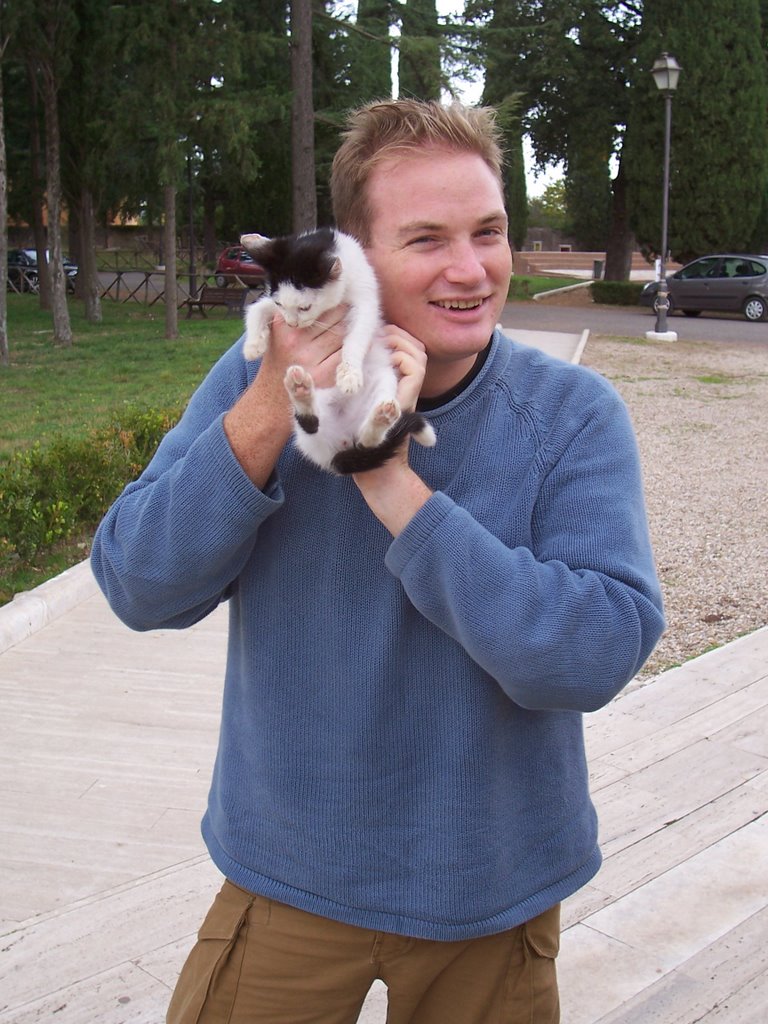
Cats just love me! I’m known as “Il Gattino.” But do you like my pet kitten? I named him “Moses.” I’m told his friends just call him “Mo” (which is short for “More” as in “More Money”). He likes his home amid the ruins of Hadrian’s old Villa near Tivoli.

My last cat was named “Ramie” (named after an Asian perennial plant). It used to claw other cats in battles atop a wall under my balcony (their screams sounded human). I always figured she would die of rabies or a claw wound to the eye. My neighbor lady, who looked like La Befana, used to feed the cats while saying to them: Parlami d’amore!

Romanovs to the Pope: Siberian marble as a gift...


From the Ostian Basilica: ab oriente et occidente! Don’t you just love Russian marble?

This gorgeous green marble comes from Siberia. It’s called “malachite” (a mineral carbonate of copper). Czar Nicholas I donated the marble seen in this altar to Blessed Pope Pius IX for use in the Ostian Basilica of Saint Paul Outside the Walls. My two favorite altars in Rome are these two: the one seen in the photo and its twin across the sanctuary.

Of course Russia is the largest country in the world: a sixth of its land mass. There are many faithful Catholics in the Russia of today. Perhaps you might feel inclined to make an act of stewardship toward the Russian faithful? See this site for online donation info with PayPal: www.vladmission.org .

Statu quo (as things were before)...


When I frist saw this photo, I had but one thought that came to my mind: Pontifex! A special word of thanks to a dear friend of mine (Athanasius Contra Mundum) for this wicked old photo. One can see the sophia (wisdom) of our Catholic ancestors: they understood beauty and craftsmanship and they lived it (their vocation)!

Just imagine the newly created Patriarch of Venice, arriving to take possession of the cathedra of his new See, wearing all this glory, blessing the throngs from a gondola in the canals…with a giant oil base flag painted on the high prow and stern!

Toys from the sacristy of the Lateran Archbasilica...


From the Raccolta:

Jesu, via, veritas et vita, miserere nobis (Jesus, the way, the truth, and the life, have mercy on us).

This is an invocation to be said when people are engaged in making and repairing the ornaments of churches and liturgical vestments. The faithful who devote themselves without compensation to the making and repairing of church ornaments and liturgical vestments, either privately or in institutes founded for this purpose, as often as they devoutly recite the above invocation, while engaged in this work, that they may thus sanctify their labor still more, may gain…” a partial indulgence.

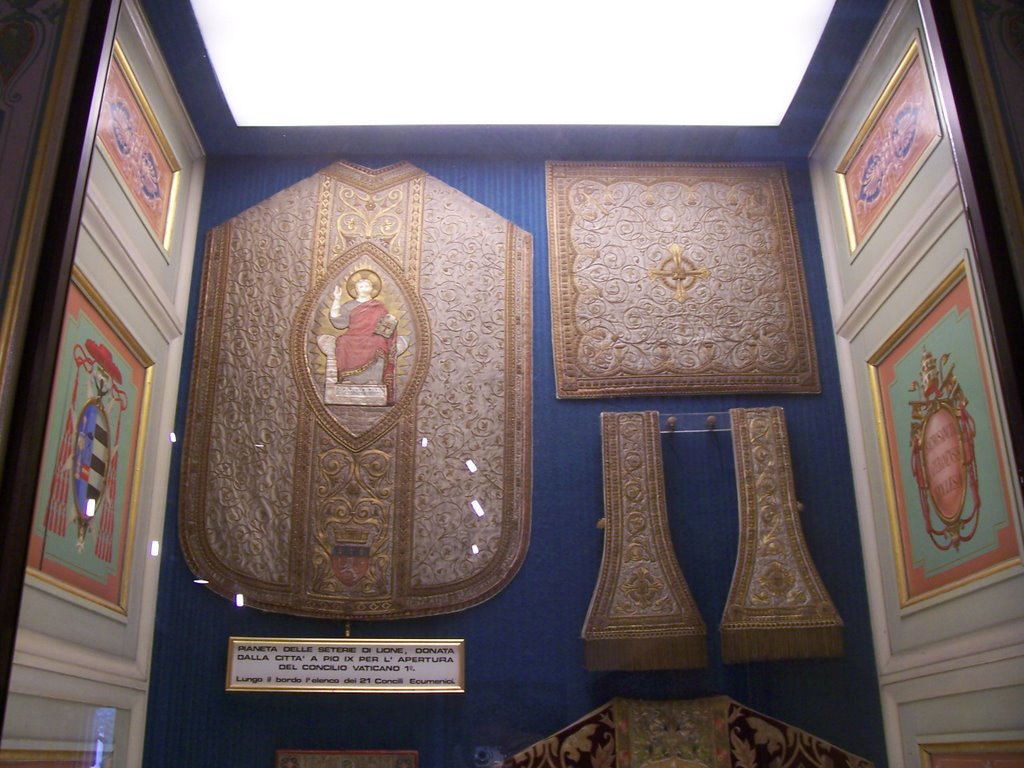
To see these and similar toys from the Lateran treasury, visit the courtyard cloister of the Lateran Archbasilica and you will be led into this room.

Sotto il cielo di Roma...


One good reason to study at the Angelicum in Rome: only the "Ang" has the big garden in which the students love to enjoy (www.pust.it)!

I took this photo to show how the Polish handyman on the staff trims the bushes: he sets up scaffolding so as to reach them!

I enjoy seeing the friars (or students) reflect in front of this statue of St. Joseph, Patron of the Universal Church.

Of course only a Protestant would be (dumb?) or (deceitful?) or ignorant enough to bellow: "But you worship statues!"

A Roma la tradizione resiste...


Nessun velo per la “first lady” Mary?

Once I saw a book entitled, Vestiarium Christianum. It was a nice little book with lots of good information. But what about protocol for women?

Why does the Virgin Mary cover hear head in the presence of the King? How odd would she look if she didn’t? Why does a nun wear a veil? How odd did they used to look when the didn’t? Why are the Catholic women of today embarassed ( = ashamed) to wear a similar veil during an audience with the King, too?

La settimana scorsa, nel corso dell’udienza con Papa Benedetto XVI la consorte del David, Signora Sandra, portava il velo (the radical feminists marked for erasure the Catholic chapel veil, but we remind ourselves to expurgate their guile from our Catholic families). Di ricente sono molte le donne di paesi a cultura cattolica ad aver lasciato a casa il velo, prima di salire al Vaticano. Una piccola rottura con la tradizione, non del protocollo (bring back the glories of Catholic protocol, friends!).

Actually, in the Italian press, I get excited even just to read this line: “…regolata dallo strettissimo protocollo vaticano…”!

Enriched by the grandeur of Latin: ardour...


Reggie qui in arce eloquentiae romanae stetit rex oratorum et latinae linguae illustrator.

Fr. Reggie Foster’s newly founded Academiae Romae Latinitatis is off to a great start. This photo depicts the first meeting which was held with over one-hundred new and returning students. With great enthusiasim the students listened to Fr. Reggie’s wisdom: “I’m concerned that people learn Latin language and Latin literature, got it?”

Special thanks from Fr. Foster and all his students to the American Institute for Roman Culture (www.romanculture.org). Their Executive Director, Darius Arya, is hosting Fr. Foster and his classes at his Institute as seen in the photo. This is ideal as Darius is an enthusiast of classical culture and a personal friend of Fr. Reggie. The Institute is located in downtown Rome, just near the Palazzo Venezia, on the Via della Gatta, 6.

Reggie was a student in Rome before the anti-Latin fury of the 1960s. He explains it like this: “When I was a youngster I studied Latin in school for fourteen years: nine years back home in America (at Holy Hill) and five years here in Rome (at San Pancrazio). We were the last generation to speak, read and hear Latin everyday of our lives. Now let’s study Latin!”

Unfurled in the fury of the storm: proud pilgrims...


Do you like the Catholic Venetian warriors with their “guidon?” It’s a small flag or streamer carried by troops, formerly to show the position of the guide or the line on which a formation was to be made (or to distinguish a company in the U.S. Army - or among Catholic pilgrims!).

Remember: the Church is not a political agent, but she also will not remain silent. The liberty of the Church must always be sought for.

Friday, December 01, 2006

Otto von Habsburg to speak in Rome...

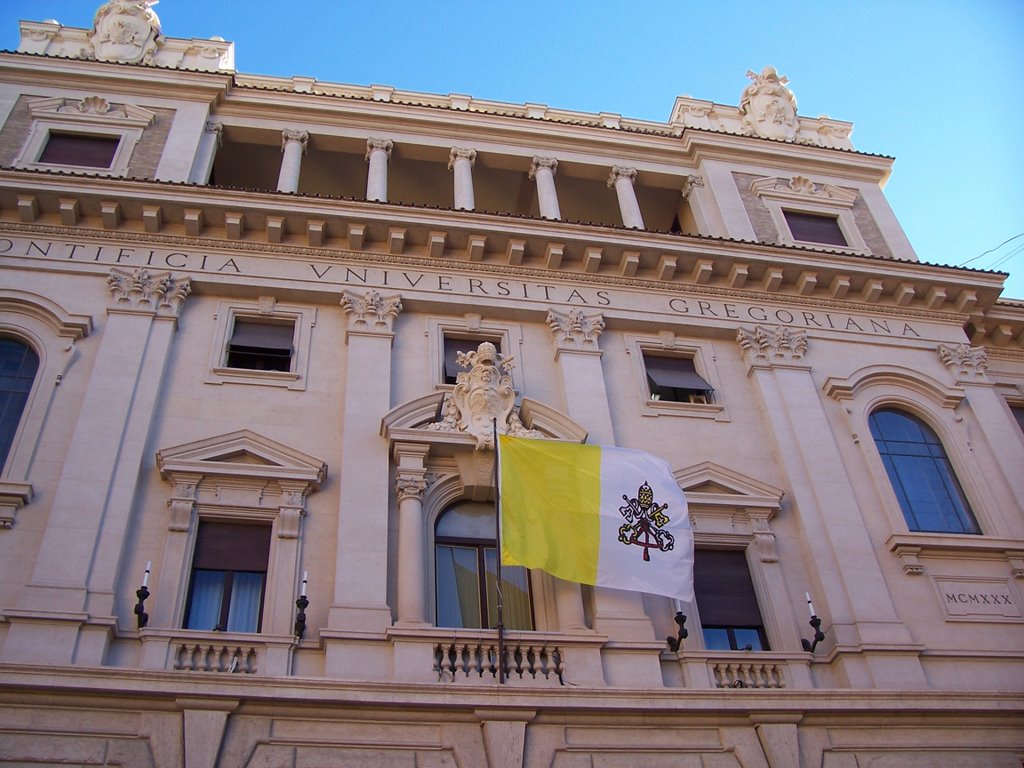
Born in 1912, he'll soon be in Rome to give a lecture at the famed Jesuit Univeristy, the Gregorian. Join us and meet His Imperial and Royal Highness, Otto von Habsburg.

December 12, 2006
6:00 pm
Gregoriana (Piazza della Pilotta)

Speakers will include:
George Weigel, His Eminence Avery Cardinal Dulles, S.J., Professor Jean Yves Naudet as well as His Imperial and Royal Highness, Otto von Habsburg.
The lecture will be sponsored by the Acton Institute (www.acton.org). Please see their web site for further details:

http://www.acton.org/centesimusannus/06.12.12.php

Honour the colours: and chat Catholicism!


Hours after I had first arrived in Rome as a graduate student, my dear friend, Mr. Poole, handed me a lovely book by Mr. Belloc (an original edition!), and read me this line:

"Wherever the Catholic sun doth shine
There’s always laughter and good red wine,
At least, I’ve always found it so,
Benedicamus Domino!"
-Hilaire Belloc

Then, we lit up our pipes and walked along the old abandoned Roman aquaducts amongst the old gypsy camps on Romes's southside and chatted il cattolicesimo. Needless to say, it was grand.

The Church is fun. She is our hobby, our passion, and it sure is a blast to chat about Her! But just be sure to portare some nice Virginia tobacco with those pipes and some nice vino da tavola bianco: e un ottimo vino da tutto pasto!

The Church Militant lives...


“Unbelievers call themselves rational; not because they decide by evidence, but because, after they have made their decision, they merely occupy themselves in sifting it.”

Cardinal Newman Oxford University Sermons (19th century)

“The primacy is the bulwark, or rather the corner-stone, of Catholicism; without it, there would be as many churches as there are nations or states. Not one of those who have denounced the papacy as a usurpation has ever attempted to show that the condition which its absence necessarily involves is theologiclly desireable, or that it is the will of God.”

-Lord Acton : Dollinger on the Temporal Power (19th Century)

The "Honored Society" ( = Mafia)...


I had to laugh when I saw this on a ministry building in Rome. Wouldn't it be fun to work here?!

Roman lunch with dancing flames...

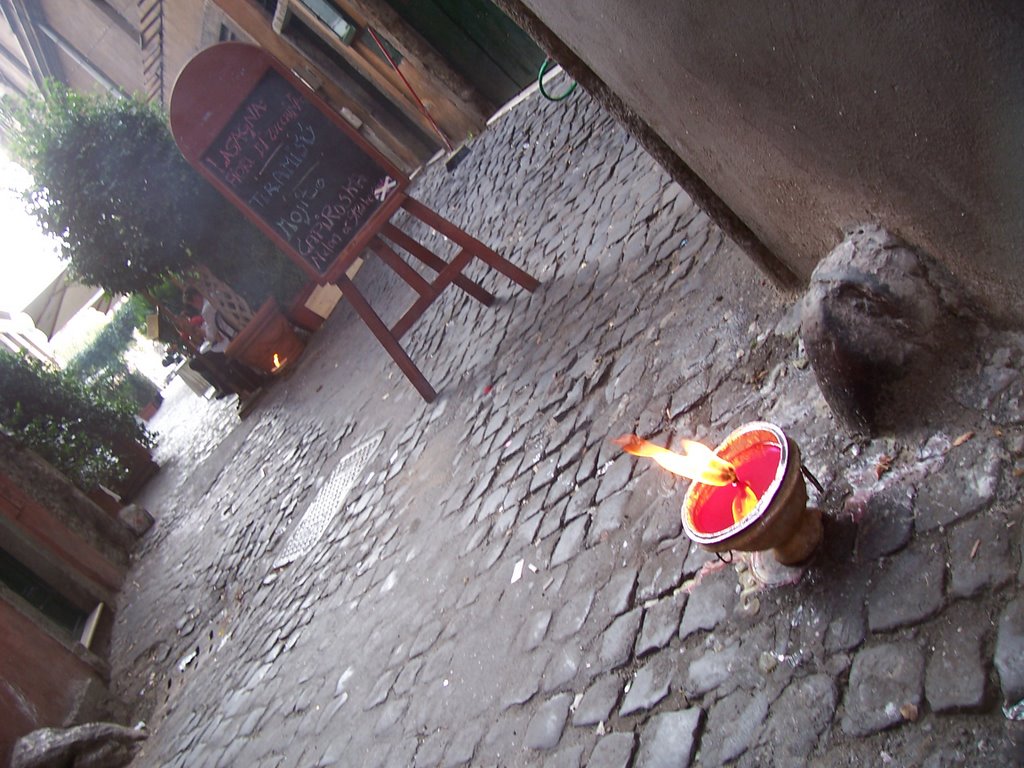
I've always enjoyed the obscurity in which treasures lay hidden in Rome. Whether you are lost or not, you never know what you will stumble upon in whatever hidden, cobbled alleyway or avenue. Ironically, anyone who has ever been to Rome knows exactly what I mean!
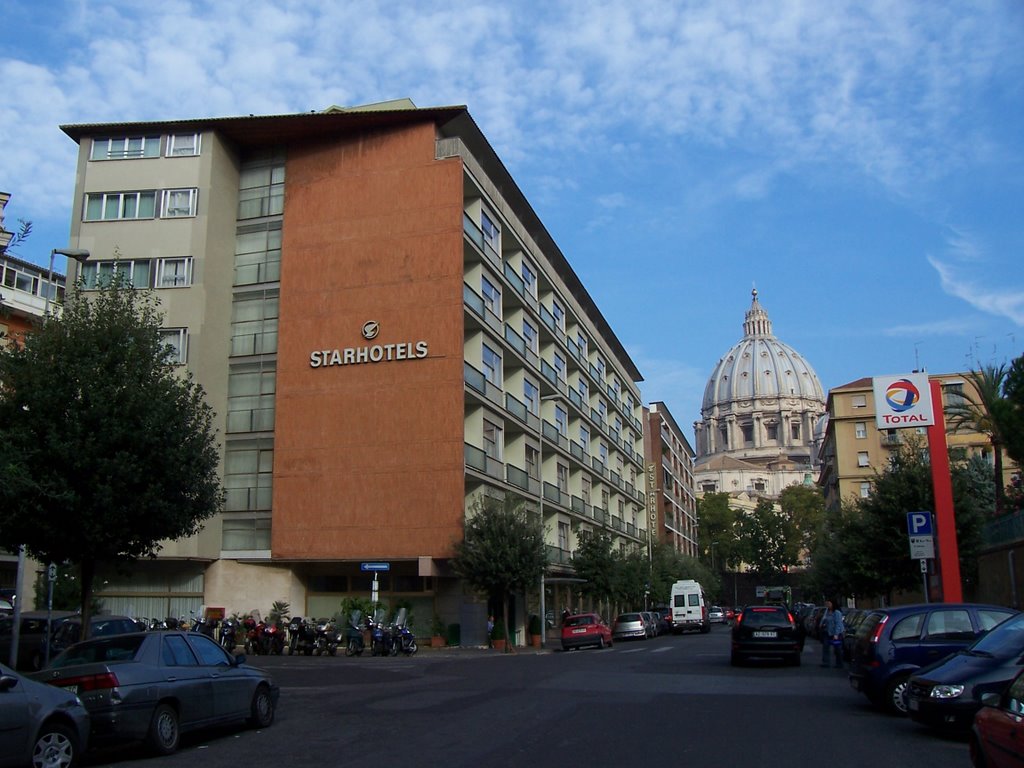
Rome's Michelangelo Hotel...


During V.II Frank Card. Spellman stayed as an honored guest at Rome's posh La Grand Hotel, near to Roma Termini.

Meanwhile, he arranged for the rest of the U.S. Bishops to stay at Rome's Hotel Michelangelo, near to the Vatican. In 1962 this hotel was only a few years old as Rome's newest and finest.

Today any Roman or tourist alike might be heard saying of this same structure: "Wow, I'll bet that big ugly building was built in the 1960s."

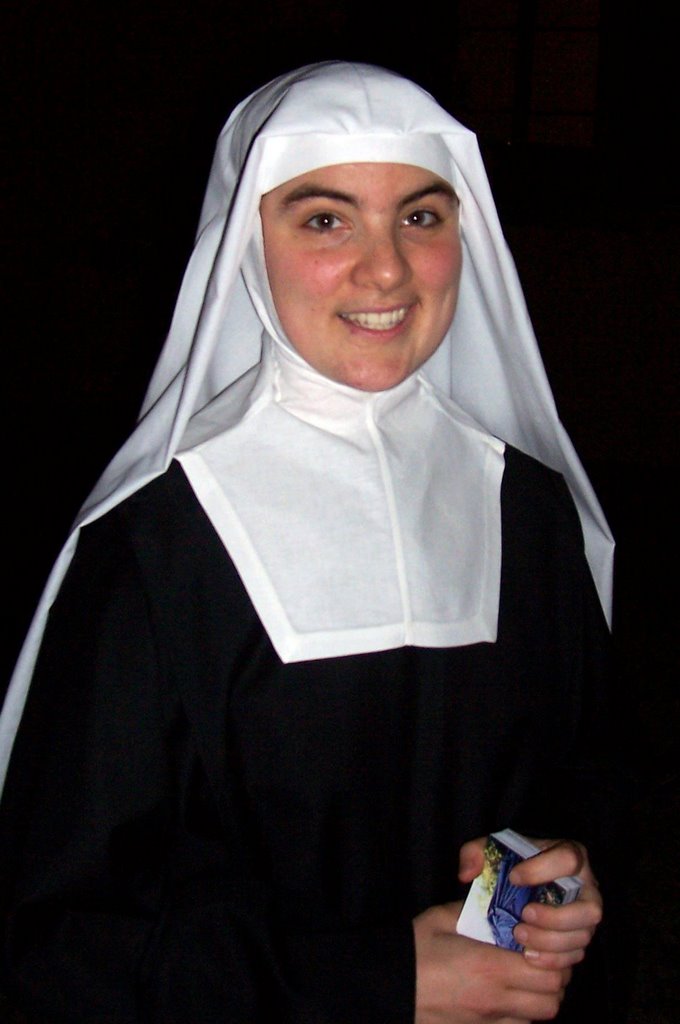
Two American girls become nuns in Italy...


On Monday, October 30, 2006, five ladies under the age of 30 made their first profession of vows as Sisters of the Adorers of the Royal Heart of Jesus Christ Sovereign Priest (a French Order of Sisters whose convent is located near Florence, Italy: http://www.institute-christ-king.org/AdorersRoyalHeart.htm ).

These sisters pray the Office and Mass exclusively according to the pre-conciliar Tridentine Rite.

During the ceremony the 5 brides were walked down the aisle by their fathers in their wedding gowns, were vested with the habit of the order and then received their new names of religious profession.

I made the trip into the Tuscan hills near Florence to attend the ceremony in the tiny hamlet of Gricigliano up the hill from the little town of Sieci. His Excellency the Most Rev. Luciano Giovannetti, Bishop of nearby Fiesole, was the celebrant.

Of the 5 young ladies who were professed, one was from Green Bay, Wisconsin and the other from Saint Paul, Minnesota. These sisters have yet to be consecrated and espoused to Christ their Bridegroom with their final solemn profession of vows which will occur a few years from now. The sisters have already completed one year of postulancy and now is their novitiate time in which they wear a white veil.